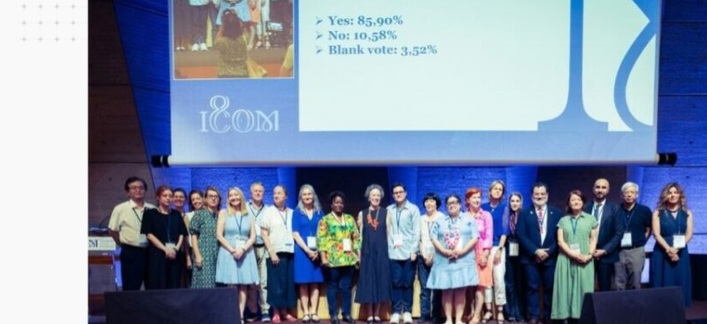
The International Council of Museums (ICOM) is an international organisation of museums and museum professionals, comprising a network of over 60,000 professionals in 139 countries and territories. On 25 June 2026, ICOM announced the adoption of the revised ICOM Code of Ethics for Museums – a milestone in strengthening the ethical framework that guides museums and museum professionals worldwide. Reviewing the Code became necessary in order to address the key challenges facing museums today, including the rise of digital technologies, the climate crisis and the ongoing need to come to terms with the legacy of colonialism through responsible and ethical museum practice.
The first ICOM Code of Professional Ethics was adopted on 4 November 1986. The Code was subsequently updated on several occasions, finally being completely revised and restructured before being released on 8 October 2004 as the ICOM Code of Ehtics for Museums.
The Code is based on the following five fundamental principles, which support careful decision-making and discussion of ethical issues:
- Museums should serve society by operating as spaces for open dialogue, upholding human rights, practising social justice and promoting peace.
- Museums should operate and communicate in an ethical manner and in accordance with professional standards.
- Learning activities and practices in museums should ensure a continuous exchange of knowledge and dialogue.
- Museums carry out research and disseminate knowledge on society’s behalf, thereby respecting different perspectives and the rights of the communities whose collections they hold in trust.
- The governing bodies responsible for the strategic direction and oversight of museums bear responsibility for the long-term sustainability of their institutions.
All principles are accompanyied by guidelines that serve for interpretation and implementation. You can download and read about the details here.